
In the time it took me to write this, the average large language model could write 500 relevant articles as good, if not better than this one. So which article would you prefer to read; one of those 500 or this human-constructed draft? If you chose this one, the reason might be less about methodology or any approach to writing and more about the desire to relate.
The development of AI is happening at an unprecedented pace and scale.
Today, AI can design miniproteins to neutralize snake venom and develop predictive modeling for molecular docking, generating new ways to use old therapies against viruses like Covid-19. And from a single prompt, you can write software or model a building, efforts that would have previously taken days or even months to construct.
In the plant world, it’s reminiscent of the kudzu vine. For those who don’t remember, kudzu was dubbed the “vine that ate the south” for its voracity, leveling entire forests when it used the trees as supports to gather sunlight and unwittingly smothered them.
So how does this relate to AI?
When we introduce a plant to an ecosystem that has never before encountered that plant, we run the risk of creating a scenario in which the ecosystem doesn’t have time to respond to the change. Kudzu and AI are alike in that sense, and so we find ourselves in the proverbial forest beneath the shade of a creeping vine.
However, in this fast-modeling, predictive world of artificial intelligence, we are beginning to see something equally as innovative: human intelligence. Whether or not humans inadvertently destroy themselves via AI or some other calamity, (which as I write this, doesn’t sound very intelligent), most of us crave the scale and perspective of our human counterparts.
It isn’t that AI is deficient in any real sense, but AI’s understanding of what it means to be human is limited to the training model. Humans, unlike these models, have real-world experiences. We live in an emotional state that is tuned in to the world around us for survival. To be human is to see the rich textures, colors, to savor the aromas, to hear the hymn of birds, insects, of rustling leaves and rushes. AI can generate a description much like that one that will satisfy us intellectually, but will it satisfy our curiosity about what it means to another human?
Now, more than ever, with the media projecting various end-game scenarios that all seem to point toward the end of the world as we know it, I turn to the footpaths intertwined within the forests of the Adirondacks or sit at the lulling Mohawk, in the shade of trees planted by some designer long before my arrival here, to contemplate what it means to be me; what it means to be us. And how landscape might ground us and afford us the time to reflect and respond to the change enveloping our world.
Kudzu shaded out entire forests because the forests did not have time to adapt to the arrival of the vine. Humans, on the other hand, are already asking some hard questions, demanding accountability, guardrails, and working toward understanding some of the fundamentals around AI safety on a global scale.
Today we are being asked to balance the need for artificial intelligence with a desire for the human perspective. We come to the table with something uniquely that; us. We’re imperfect and slightly irrational at times, but that’s the fingerprint that helps us recognize the value in who and what we are. We find ourselves living in an age that has us thinking about what it really means to be human and why that human perspective has value. It might explain why we sometimes choose to avoid the uncanny valley and run for the forest, even as the shade of that vine draws near.
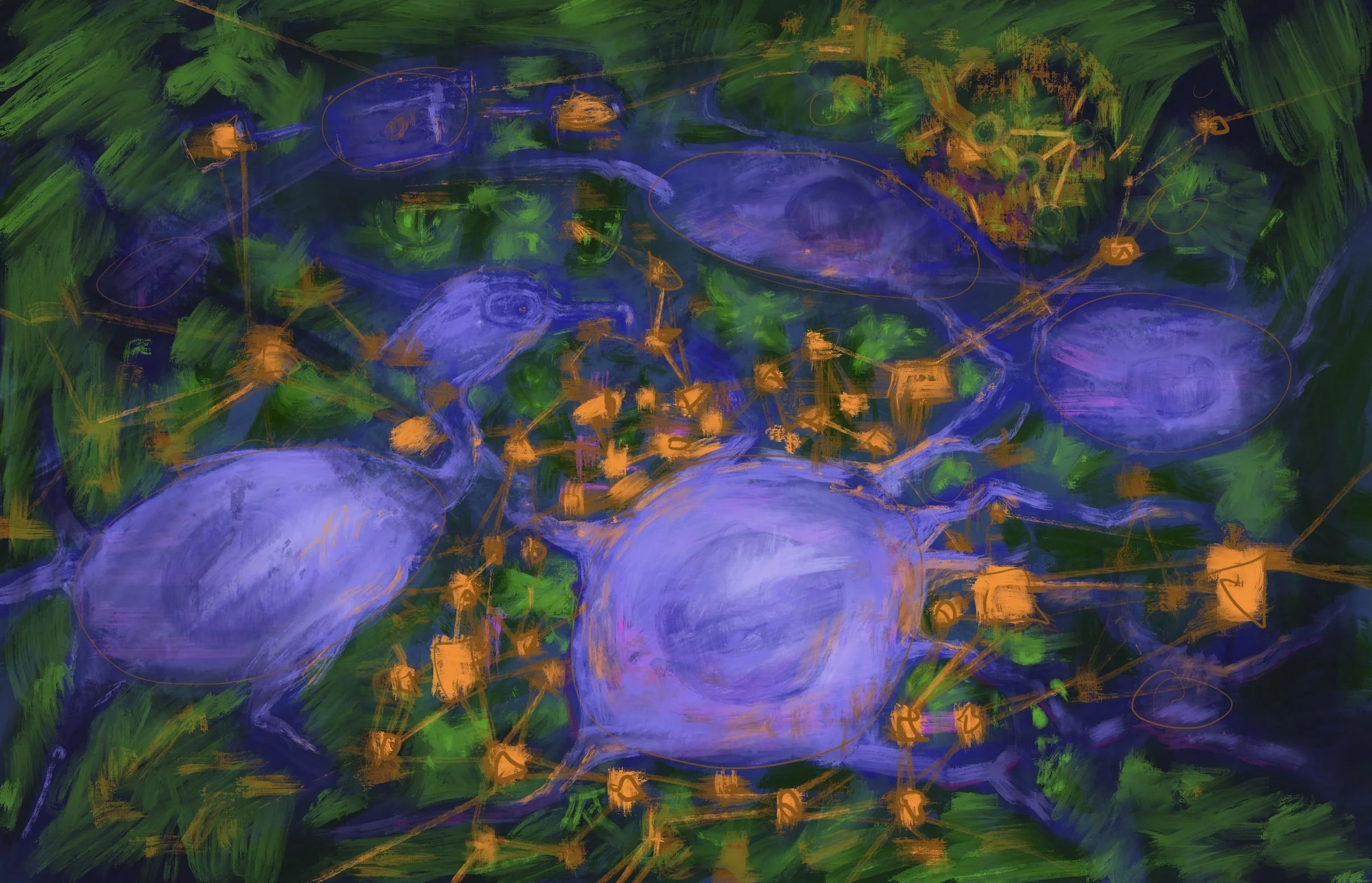
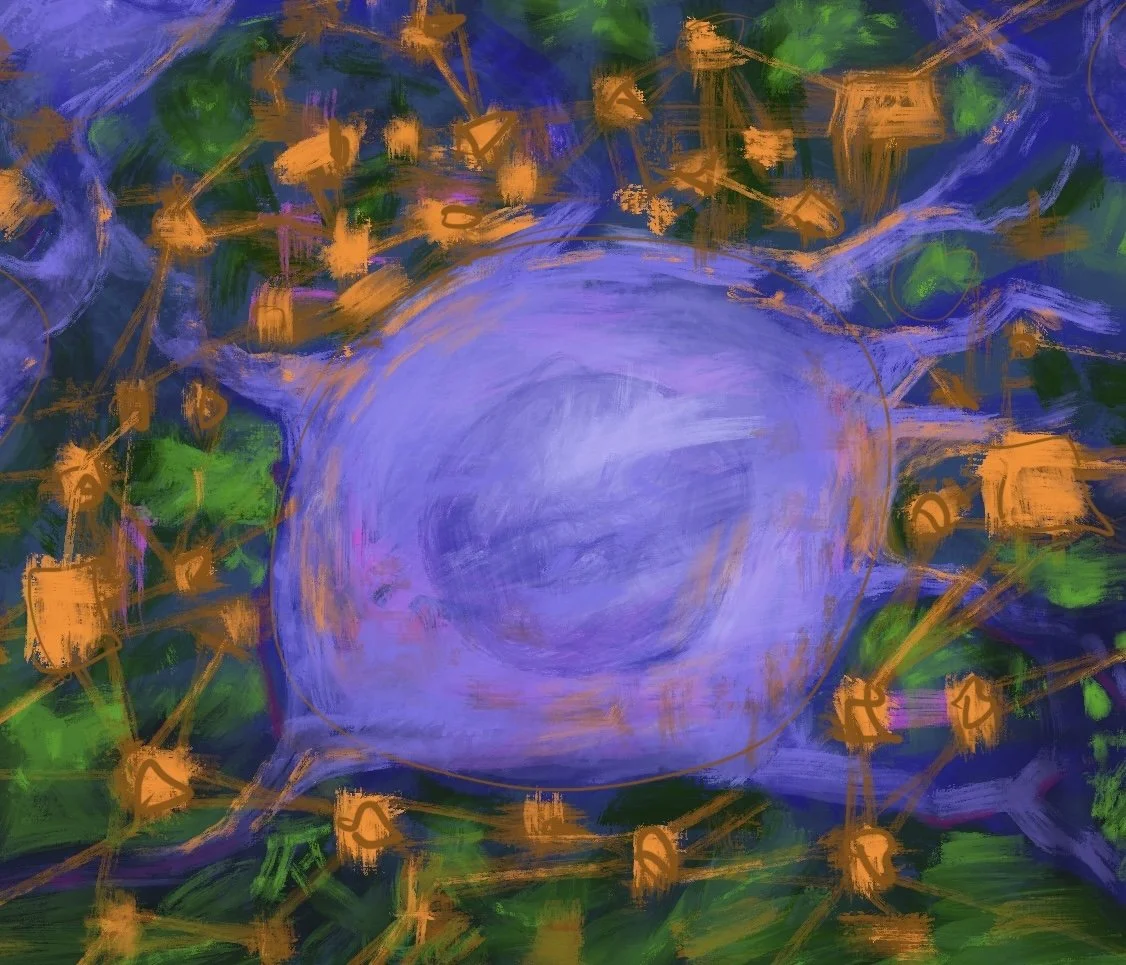
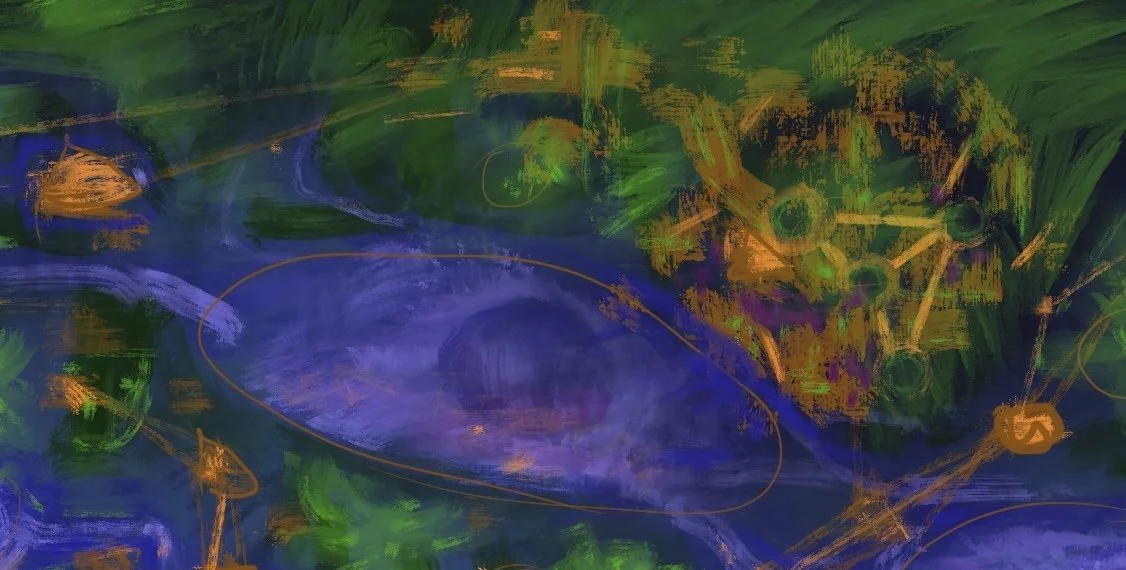
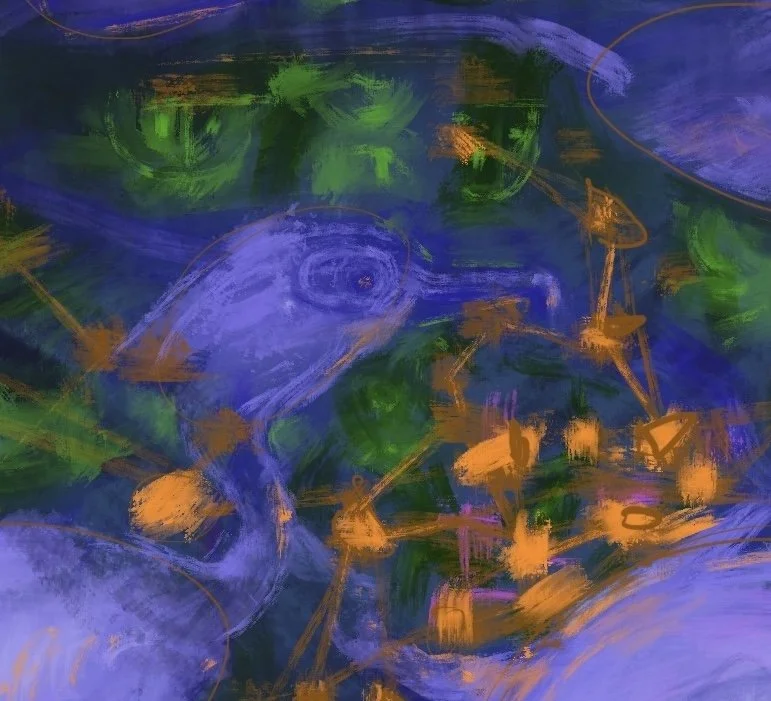
Painting by Chris Landau
